


Why Rats and Mice Move Into South Western Sydney Homes Every Winter (and How to Stop Them)
- Darren Wray
- 13 minutes ago
- 4 min read

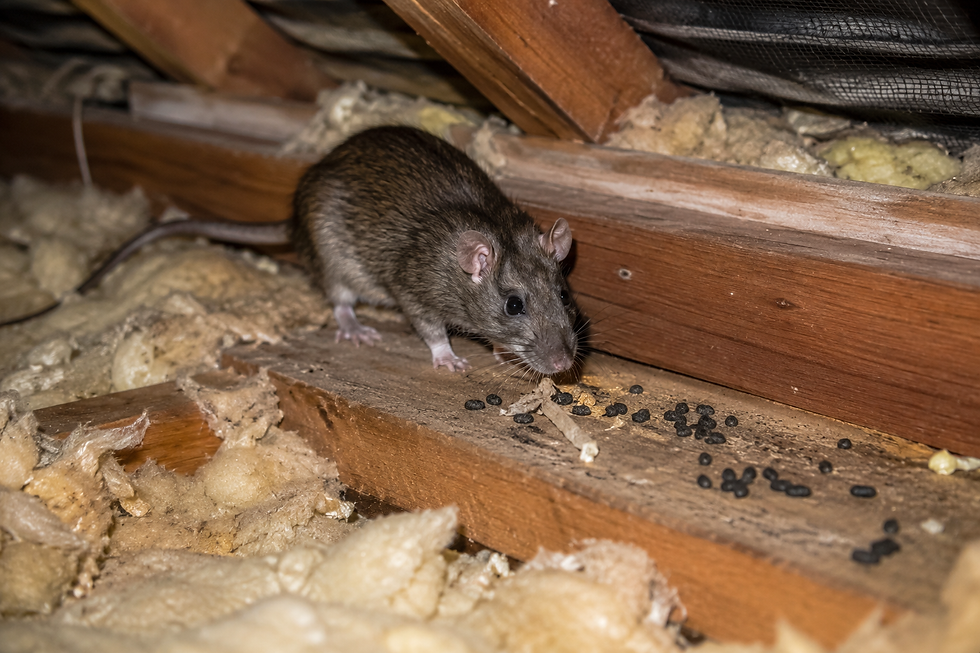
If you've been hearing scratching, scurrying or light tapping in the roof since the weather turned cold, you're not imagining it, and you're definitely not alone. Winter is the single biggest trigger for rodent call-outs across Campbelltown, Liverpool, Camden and the wider Macarthur region. As temperatures drop, rats and mice that have spent the warmer months living outdoors in gardens, drains and sheds start actively looking for somewhere warmer, and roof voids and wall cavities are exactly what they're looking for.
Here's what's actually going on, what to look and listen for, and an important update on rat bait that every homeowner should know about before reaching for a box at the hardware store.
Why Winter Specifically?
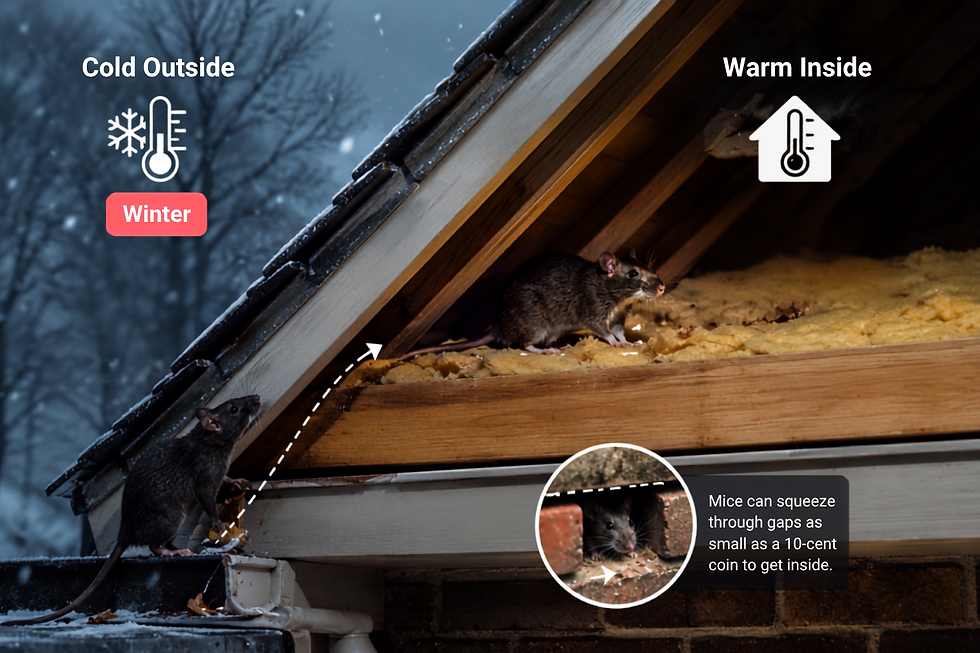
Rats and mice don't like the cold any more than we do. As outdoor conditions get harsher, they follow warmth, shelter and easy access to food — and roof voids tend to stay warmer than the rest of a house, especially where ceiling insulation traps heat. Roof rats are excellent climbers and will travel along power lines, tree branches and brickwork to get up there, while mice can squeeze through gaps as small as a 10-cent coin to get in at ground level.
It's a predictable, well-documented seasonal pattern — not bad luck. Pest control providers across Sydney consistently report a sharp rise in rodent call-outs through autumn and winter, and the reason is simple: it's cold outside, and your roof is warm.
What the Noise Actually Means
Rodents are nocturnal, so the scratching, scurrying or running sounds you hear at night are them moving across the timber framing of your roof, often directly above bedroom ceilings where insulation makes the warmest nesting spot. During the day, they're tucked away in wall cavities or quiet corners of the roof void, which is exactly why most homeowners don't notice a problem until it's already established.
Heavy, slow scratching or thumping tends to mean rats, their larger bodies make heavier, more deliberate sounds.
Light, quick scurrying or high-pitched squeaks are more typical of mice.
Daytime noise is usually something else entirely, possums or birds ,since rats and mice are almost always active at night.
Other Signs Worth Checking For
Droppings: mouse droppings are small and pointed at both ends, like grains of rice; rat droppings are larger, sausage-shaped, and blunt.
Greasy smear marks along skirting boards or beams, where rodents travel the same path repeatedly.
Gnaw marks on food packaging, timber, or even electrical wiring — rodents chew constantly to keep their teeth worn down.
Shredded paper, fabric or insulation gathered into a corner of the roof void — nesting material.
A strong, stale or ammonia-like smell in enclosed spaces, particularly if the problem has been going on a while.
One important reality check: seeing or hearing evidence of one rodent essentially never means there's only one. By the time signs are obvious, an established population is the more likely explanation.
Why Sealing Entry Points Alone Doesn't Solve It
It's tempting to just plug the gaps and call it done, but pest professionals are consistent on this point: sealing without first dealing with the rodents already inside can trap them in the roof, leading to a far worse smell and a dead animal you often can't reach. Effective rodent control needs to happen in the right order — inspection and treatment first, exclusion work second.
Common entry points worth knowing about (so you can point a tradesperson to them once any active rodents have been dealt with) include gaps where pipes, gas lines or air-conditioning units pass through external walls, damaged roof tiles or flashing, unprotected weep holes in brickwork, and subfloor or wall vents with damaged or missing grilles.
Important: Rat Bait Rules Have Changed in 2026
If you're thinking about grabbing a box of rat bait from the supermarket or hardware store, there's something worth knowing first. In March 2026, the Australian Pesticides and Veterinary Medicines Authority (APVMA) officially certified that second-generation anticoagulant rodenticides — the strongest class of rat and mouse baits, including products containing brodifacoum, bromadiolone, difenacoum, difethialone and flocoumafen — should be declared restricted chemical products. Registration of these products has been suspended nationally for at least a year from 24 March 2026.
In plain terms: the most powerful over-the-counter rat baits are being phased off general retail shelves, with several major hardware and supermarket chains committing to remove them from sale altogether. Going forward, products containing these active ingredients are intended to be available mainly through licensed pest management professionals, who can use them in line with the updated, tighter rules around tamper-resistant bait stations and placement.
The change was driven by genuine, well-documented harm to native wildlife — owls, goannas, eagles and other predators that eat rodents which have already taken bait can be poisoned themselves through what's called secondary poisoning.
It's a sensible change, but it also means DIY rat control with the strongest products is becoming a less realistic option for most households, which makes professional treatment more relevant now, not less.
What Professional Rodent Control Actually Involves
A proper rodent job isn't just placing bait and walking away. It typically starts with an inspection of roof voids, subfloors, external walls and likely travel routes to confirm species and activity level, followed by strategic, secured bait or trap placement along confirmed runways, and exclusion work to seal up the entry points once activity has settled down. Follow-up matters too, confirming the problem has actually stopped, not just gone quiet for a week.
Don't Wait for Daylight Sightings
If you've been hearing activity in the roof at night across your Campbelltown, Liverpool or Camden home this winter, it's worth getting it looked at properly rather than waiting to see how bad it gets. That Pest Guy provides targeted rodent treatments across South Western Sydney and the Greater Macarthur region, with the kind of straightforward, local service you'd expect from a family-run operator who actually lives in the area.
Call Darren on 0449 615 834, or reach out through our contact page to book in.
Sources consulted: APVMA official certification announcement, 12 March 2026; general pest industry guidance on rodent biology, entry points and seasonal behaviour in Sydney.
This post is for general information and isn't a substitute for a professional inspection.
Comments